Five Signs Your Commercial Drain Line Is About to Fail.
Slow drains and gurgling pipes aren't cosmetic annoyances. They're a commercial building telling you it's about to have a much worse day. Here's what to watch for before the backup happens.
Gary Raulino4 min readFacility Maintenance
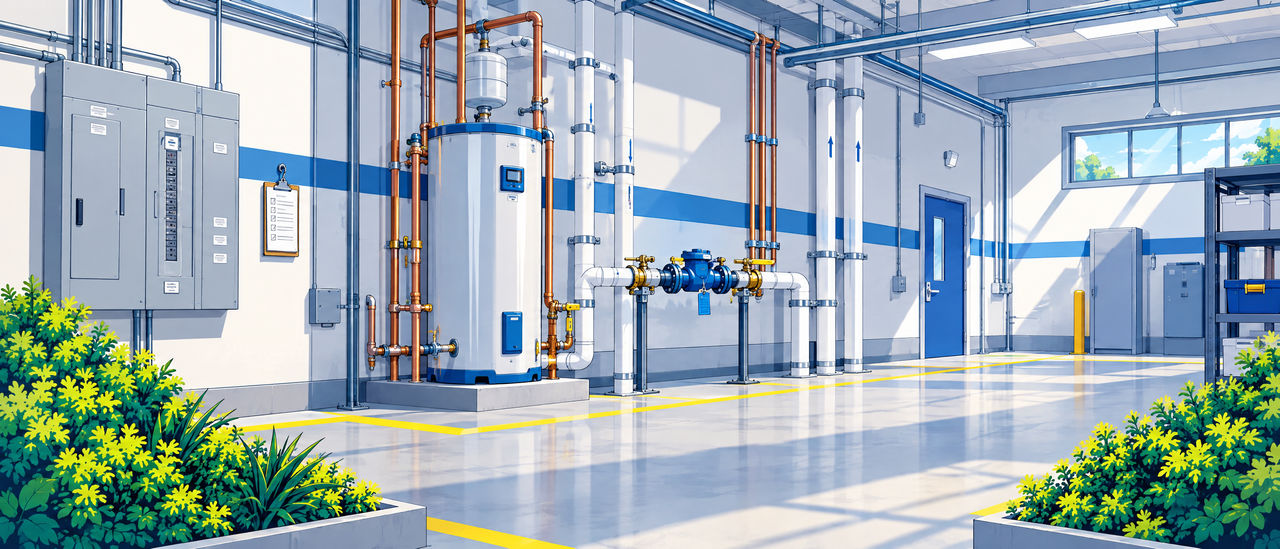
A backed-up drain in a commercial building rarely happens without warning. It builds for weeks, sometimes months, and the signs are easy to write off as minor annoyances right up until the line actually blocks and water starts coming up somewhere it shouldn't.
Here's what we tell property managers to watch for.
1. Slow drainage in more than one fixture
A single slow sink is a local clog. Slow drainage across multiple fixtures on the same floor, or in fixtures that share a stack, usually points to a blockage further down the line. That's a different problem, and a plunger won't fix it.
2. Gurgling sounds after flushing or draining
That gurgle is trapped air pushing back through the system because something downstream is restricting flow. It's one of the earliest warning signs and one of the easiest to ignore, because the fixture still drains, just noisily.
3. Recurring odors near floor drains
Sewer gas smell that comes and goes, especially near floor drains in mechanical rooms or basements, often means a partial blockage is letting gas escape past standing water that should be sealing the trap.
4. Water backing up in the lowest fixture first
In a building with fixtures at different levels, a blockage downstream of everything typically shows up first at the lowest drain, usually a basement floor drain or a ground-floor bathroom. If that fixture is backing up when nothing else seems affected, the problem is likely in the main line, not the fixture itself.
5. A history of "it happened once before"
If a line has backed up once, even if a plumber cleared it and everything's been fine since, that line has a known weak point: root intrusion, scale buildup, a bellied section of pipe. It will happen again unless something changes, usually at the worst possible time.
Camera inspection beats guessing
Every one of these signs can have more than one cause, and the only way to know for certain what's happening inside the line is to look. A camera inspection takes the guesswork out of it and tells you exactly where the problem is and what it will take to fix it, before it becomes an emergency call on a Saturday.
Written by
Gary Raulino.
Gary Raulino is a highly accomplished leader with over 20 years of experience in the facility management industry.